Tag: 2019

  • Endometriosis Research Grant Opportunity (EPCDR Initiative)

    The Medical Research Future Fund (MRFF) Emerging Priorities and Consumer Driven Research (EPCDR) Initiative aims to enable or support:

    • High quality biomedical, clinical, health services and/or population health research which improves patient care
    • Translation of new discoveries into clinical practice
    • New diagnoses, treatments and cures to those suffering from rare and debilitating conditions
    • Joint collaboration of consumers and researchers in undertaking research in emerging priority areas, and
    • Many Australians with debilitating conditions


    The objectives of the 2019 Endometriosis Research grant opportunity aims to:

    • Facilitate innovative, high quality research which will lead to:
      • Improved diagnosis and treatment of endometriosis
      • Research which will address the gaps in research, leading to a better understanding of the causes and underlying factors which contribute to the development and progression of endometriosis
      • Facilitate consumer involvement in the design and evaluation of the research project (including participation in the conduct of the research)
      • Provide high-quality evidence for the new health treatments and/or drugs (where appropriate)
      • Enable rapid translation of consumer-relevant research into clinical practice, health policy and/or health advice which will lead to positive impacts for consumers
      • Encourage the development of multi-disciplinary research teams which deliver measurable outcomes which are a priority for consumers
      • Encourage collaboration between research teams, policy makers, healthcare funders and the health delivery sector (e.g. education, community, industry and/or healthcare)


    The total amount available is $9 million. Applications must be submitted electronically via the Research Grants Management System (RGMS). More information


    Applications are now open, with minimum data due 22 January, 2020. Applications close 2pm (AWST), Wednesday 5 February, 2020.


  • CT:IQ – Clinical Trials: Thinking Smarter Survey

    CT:IQ Clinical Trials: Thinking Smarter is a cross industry, collaborative group which aims to improve recruitment into clinical trials within Australia. As a part of this project the team are seeking opinions from all parts of the community, including researchers, clinicians, consumers and community members on the barriers and enablers to a site which will be designed to recruite participtants to clinical trials.


    The introduction of the survey provides details of the project, confidentiality and privacy of responses. The survey will take approximately 10-20 minutes to complete.

    The survey will close on Saturday November 30.

    Click here to take the Survey


    The ethical conduct of this survey has been approved by the Macquarie University Human Research Ethics Committee (Project ID 5764) and will be carried out according to the National Statement on Ethical Conduct in Human Research (2007) produced by the NHMRC.


    If you have any questions about this survey or the project please contact the CT:IQ Project Manager, Sonia Harvey

  • Rare Cancers, Rare Diseases and Unmet Need Grant Opportunities

    The Medical Research Future Fund (MRFF) Clinical Trial Activity in the Rare Cancers, Rare Diseases and Unmet Need Grant Opportunities are now open. The Minimum Data submission date is 2pm (AWST), Wednesday January 22.


    Applications must satisfy all the requirements set out in the 2019 Rare Cancers, Rare Diseases and Unmet Need Grant Opportunity Guideline.


    The following opportunities are open:

    • 2019 Reproductive Cancers Grant Opportunity – Read More
      • Applicants to this opportunity must propose a clinical trial which addresses a gap in current research and/or knowledge in reproductive cancer
      • Total amount available = $15 million
    • 2019 Childhood Brain Cancer Grant Opportunity – Read More
      • Applicants to this opportunity must propose a clinical trial which addresses a gap in current research and/or knowledge in childhood brain cancer
      • Total amount available = $5 million
    • 2019 Neurological Disorders Grant Opportunity – Read More
      • Applicants to this opportunity must propose a clinical trial which addresses a gap in current research and/or knowledge in neurological disorders, including (but not limited to) Duchenne Muscular Dystrophy (DMD), spinal cord injuries (SCI), and Autism Spectrum Disorders (ASD)
      • Total amount available = $20 million
    • 2019 Rare Cancers, Rare Diseases and Unmet Need Grant Opportunity – Read More
      • Applicants to this opportunity must propose a clinical trial which addresses a gap in current research and/or knowledge in rare cancers, rare diseases and areas of unmet medical need
      • Total amount available = $15 million


  • Researcher in bid to blow rogue cancer’s cover

    A Western Australian cancer researcher is on a mission to blow the cover of a highly aggressive and difficult-to-detect form of breast cancer and believes a mysterious protein could hold the key to the breakthrough.

    Fiona Stanley Hospital oncologist Dr Indunil Weerasena’s research follows important new findings, made by other local researchers, about the mysterious protein called AAMDC.

    Research has shown that AAMDC not only hastened cancer cell proliferation but also made them resistant to the hormone and chemotherapies that were commonly used to fight ER positive breast cancers. High levels of AAMDC happen to be found in a subtype of cancer known as IC2. This subtype is known to have high rates of recurrence as well as resistance to contemporary chemotherapy regimes.

    Dr Weerasena’s project, with the aid of a McGowan Government-funded Cancer Research Fellowship, aims to determine whether the rogue ER positive cancer is an IC2 subtype.

    His findings could pave the way for the earlier identification of these cancers and more effective treatments, potentially with older chemotherapy regimes. Parallels between breast and ovarian cancer mean Dr Weerasena’s research may also have further benefits for the treatment of some ovarian cancer patients.

    Dr Weerasena is one of seven researchers awarded a Cancer Research Fellowship in the WA Cancer and Palliative Care Network program.

    More than $1.2 million will be distributed this year in the program that was established in 2014 to enable medical practitioners working in the WA Health system to expand their cancer expertise and research skills.

    Read the full media statement


    Full list of recipients

     Recipient   Project   Hospital
    Eliska Furlong Evaluation of an enhanced influenza vaccination schedule in immunocompromised children undergoing treatment for cancer by assessment of cellular and humoral immune response Perth Children’s Hospital
    Timothy Humphries Integrating Tumour Mutational Burden testing for appropriate selection of immune-oncology therapy in metastatic melanoma Sir Charles Gairdner Hospital
    Andy Hutchison Implementation of Chimeric Antigen Receptor (CAR) T-cell therapy in Western Australia Fiona Stanley Hospital
    Azim Khan Defeating Breast Cancer Disadvantage in the Indigenous population Fiona Stanley Hospital
    Annalise Martin Precision Medicine, identification of novel drug targets for Acute Myeloid Leukaemia in Western Australia through analysis Royal Perth Hospital
    Indunil Weerasena Integrated Cluster 2 Breast Cancers: The Wolf in Sheep’s Clothing Fiona Stanley Hospital
    Courtney Wood Paediatric Palliative Care Fellowship Perth Children’s Hospital
  • AusBiotech 2019 Conference wrap up

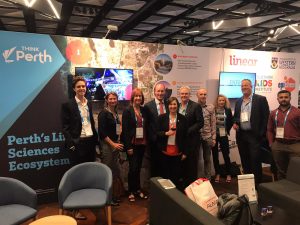
    The AusBiotech conference is the premier annual conference for Australia’s Life Sciences sector. The 2019 conference brought together Australian and international biotech leaders and stakeholders in Melbourne for three days of education, skills building and networking. WAHTN was one of the Think Perth delegation who attended the conference. We were accompanied by representatives from the City of Perth, The University of Western Australia, Epichem, Linear Clinical Research, Telethon Kids Institute, Proteomics International, Lazcath and the Perth Convention Bureau to showcase the burgeoning life science sector in Perth and WA to a national and international audience.

    Western Australia has shown the largest increase in life science companies. Since 2017 we’ve had a 50% increase in the number of organisations, increasing from 119 to 179 in 2019.

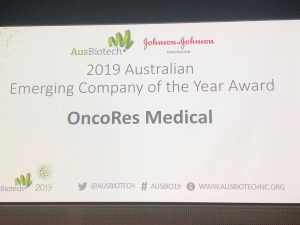
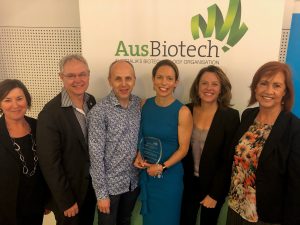
    A young West Australian company OncoRes Medical won the 2019 Australian Emerging Company of the Year Award. Dr Katharine Giles (Chief Executive Office and Managing Director) accepted the award on behalf of OncoRes Medical (see image below). This prize was awarded on significant achievements by a company working in the biotechnology or life sciences sectors, and is specific to companies under five years of age. We congratulate our friends at OncoRes Medical for a well-deserved award.


  • WAHTN’s 2020 Biostatistician Fellowships

    The Western Australian Health Translation Network (WAHTN) is inviting applications for 2020 – 2021 Biostatistician Fellowships. The application period closes:  9am (AWST), Monday 25 November 2019.


    The Fellowships align with WAHTN’s aim to support emerging research talent, building and strengthening the research workforce within WA, and enhancing our capacity and capability to undertake high quality translational research. WAHTN is offering two (2) Fellowships to employees of WAHTN Partner Organisations to provide protected time to undertake a 12 month Fellowship. The first Fellowship round will be from January 2020 to December 2020 and the second will be from July 2020 to June 2021.


    The Fellowships are designed to provide training opportunities for Biostatisticians to develop their skills for consulting with clinical researchers, build relationships for future collaborations, and provide biostatistical support to WAHTN Partner Organisations.


    Applications must be submitted by the Applicant to the WAHTN’s Clinical Trial and Data Management Centre (CTDMC) via email at CTDMC@curtin.edu.au. Late applications will not be accepted. Please direct any enquiries to the CTDMC via email: CTDMC@curtin.edu.au or phone: 08 9266 1970.


    Download the Application Guidelines and Form here.

  • East Metro Health Service Mental Health Research Fund now open!

    The East Metropolitan Health Service (EMHS) has committed $1 million to fund research into improving the services provided to community members experiencing mental illness.


    The EMHS Mental Health Research Fund will support research and evaluation projects which aim to generate innovative and ambitious solutions to service delivery challenges. The Fund will provide a maximum of $200,000 per project for periods up to 2 years. However, acknowledging the breadth of scope of projects envisaged, the total funding will be determined based on the needs of each project. Other factors, including the level of in-kind support or matched funding from partner organisations will be taken into account.


    Funding is available to cover the direct costs of the project including:

    • Project-specific salary support for research personnel e.g. project coordinator, research associate
    • Materials and consumables
    • Specialist equipment essential for the project (the equipment will remain the property of EMHS)
    • Expert services e.g. biostatistical or health economist services
    • Dissemination, engagement and translation activities (these are considered key aspects of projects to be funded)


    Funds cannot be used for:

    • Salary recovery for investigators already employed by EMHS or a partner
    • Infrastructure costs – such as building, basic services and utilities – or the cost of large equipment
    • Organisational overheads and indirect costs
    • Travel and overseas allowances
    • Non-research related activities


    Eligibility Criteria:

    • Projects must have the potential to be of value to EMHS and the broader health service and to be translated into meaningful and enduring improvements to mental health services within a 2 year time-frame (1 January 2020 to 31 December 2021)
    • There must be a significant contribution to the project by EMHS employees, although the lead researcher can be from a partner organisation
    • The work must be substantially undertaken within the EMHS i..e Royal Perth Hospital, Bentley Hospital, Armadale Health Service, Kalamunda Hospital, St John of God Midland Public Hospital, EMHS Population and Community Health Programs
    • Collaboration between multiple EMHS hospitals, services and departments and partnerships with other health services, primary care networks and universities is strongly encourages
    • It’s expected partner organisations will match the funding provided by EMHS with in-kind support and/or a monetary contribution
    • Projects which incorporate a research capacity building component and provide a lasting legacy for the EMHS site(s) e.g. an ongoing academic partnership, new internal EMHS collaborations, up-skilled staff, research-specific equipment or infrastructure are highly desirable


    Expressions of Interest Applications close 5pm, Friday 22 November, 2019. The EMHS Mental Health Research Fund site has applications forms and further information

    Please note Applications will be assessed by a Review Panel using an Assessment Criteria. You can access the Assessment Criteria via the Mental Health Research Fund Prospectus

    Contact Sharon Oddy with any questions

  • Australian National Phenome Centre (ANPC) launch

    Western Australia is poised to become a world leader in the development of personalised medicine with the opening today of the Australian National Phenome Centre (ANPC).

    The Centre is set to revolutionise understanding of the biggest health challenges of our time, including cancer, diabetes, obesity and dementia and provide a roadmap for people to live longer, healthier lives.

    Phenomic research will transform health care because it considers an individual’s genetic profile in combination with their lifestyle and exposure to environmental factors to understand the origins of their disease or illness and tailor the best possible treatment.

    Led by Murdoch University and housed in the Harry Perkins Institute of Medical Research (South), the ANPC is supported by the State and Federal governments, the Australian Research Council, Western Australian Health Translation Network (WAHTN), and Western Australian universities and research institutes.

    To learn more please visit the ANPC web page.

  • WAHTN awarded Federal Budget funds for the Rapid Applied Research Translation program

    Today the Australian Government’s Minister for Health, Hon. Greg Hunt MP, has announced eight national translation research centres, including the Western Australian Health Translation Network (WAHTN), will receive more than $33 million for research into health care practices and interventions. The funding will focus on people with, or at risk of, developing chronic conditions.

    The WAHTN has been awarded $4.14 million in the latest round of the Australian Government’s Medical Research Future Fund (MRFF) as part of the Rapid Applied Research Translation (RART) program. This round of RART grants was targeted to primary care research, with an emphasis on multidisciplinary care and public health interventions which address lifestyle factors which lead to chronic disease. This builds on $1.97 million previously awarded to WAHTN in 2018, totalling $6.1 million provided by the Australian Government over three years.

    Commenting on the successful funding application, Executive Director of WAHTN, Professor Gary Geelhoed, said “The awarding of these funds to WAHTN and to similar bodies around Australia, comprising the Australian Health Research Alliance (AHRA), confirms the ongoing commitment of the National Health and Medical Research Council (NHMRC) and MRFF to the importance of these entities in promoting medical research and its timely application.”

    The grant will provide funding for 12 research projects from WAHTNs Health Service Translational Research Projects (HSTRP) initiative, three Targeted Translational Research (TTR) Fellowships and several National System Level Initiatives, which are projects carried out across the nine AHRA Centres throughout Australia.

    The TTR Fellowships align with WAHTNs aim to support our emerging research talent. Along with building and strengthening the research workforce within WA and enhancing our capacity and capability to undertake high quality translational research. The Fellowships will be targeted to the research areas of:

    • Wound Care
    • Biostatistics

    The HSTRP program attracted 68 applications from the public and private health sector, PathWest and the WA Primary Health Alliance. The large number of quality applications made the process highly competitive. It also provided an encouraging snapshot of the strength and breadth of translational health research occurring in WA hospital and primary health settings. The successful projects, listed in the table below, will be supported by $2.84 million in MRFF funding, with matched funding from the health services.


    Read the Australian Government’s media release 


    The successful HSTRP recipients are:

    Recipient Project Title Health Service
    Dr Christopher Brennan-Jones PCH Ear Portal: Improving access to specialist ENT and Audiology services in metropolitan Perth Child and Adolescent Health Service
    Dr André Schultz Implementation of solutions to improve follow-up for Aboriginal children hospitalised with lower respiratory tract infections Child and Adolescent Health Service
    Prof Graham Hillis Community based education and exercise training in heart failure: Harnessing an existing resource to bridge a gap East Metropolitan Health Service
    Prof Christobel Saunders Measuring the cost of continuous improvement in care-cancer at Royal Perth Hospital – a ‘proof-of-concept’ East Metropolitan Health Service
    Assoc Prof Paul Cohen Getting the MOST out of follow-up: a randomised controlled trial to compare three-monthly nurse-led telephone follow-up, including monitoring serum CA125 and patient reported outcomes using the MOST (Measure of Ovarian Symptoms and Treatment concerns) with routine clinic-based follow-up, following completion of first-line chemotherapy in patients with epithelial ovarian cancer North Metropolitan Health Service
    Prof Michael Millward Integrating Tumour Mutational Burden (TMB) testing for appropriate selection of immuno-oncology therapy in metastatic melanoma fit for the modern era North Metropolitan Health Service
    Prof Girish Dwivedi High Performance Medicine through Artificial Intelligence in the Emergency Department South Metropolitan Health Service
    Assoc Prof Andrew Maiorana Primary Care Adherence to Heart Failure guidelines IN Diagnosis, Evaluation and Routine management (PATHFINDER) Study South Metropolitan Health Service
    Dr Wei-Sen Lam TeleTrials in WA: A feasibility study to develop and pilot a TeleTrials framework to bring clinical trials closer to home for country patients WA Country Health Service
    Ms Jo Moore A community and health system partnership to prevent hospitalisation and improve outcomes through a Compassionate Communities Model of End of Life Care WA Country Health Service
    Prof Desiree Silva Embedding E-Health (Pregnancy Lifestyle, Activity, Nutrition (PLAN)) into routine clinical practice pathways to provide a healthy start to life Ramsay Health Care
    Mr Richard Varhol Unlocking the potential of health system integration through data linkage: Combining primary and secondary data across the continuum of care to support policy development and clinical management of chronic disease in WA WA Primary Health Alliance
  • Raine Medical Research Foundation Grants – Closing Soon!

    Please note the below funding opportunities all close 1pm (AWST), Thursday 19 September, 2019. Guidelines, Conditions and Applications Forms


    Visiting Fellow Awards

    Raine Visiting Professor Awards

    These Awards facilitate the visits of distinguished scholars to Western Australia for the purpose of advancing medical research. Nominations are invited for 2020 and are open to medical researchers from WA Universities or affiliated medical research institutions in Western Australia.

    Charter Hall Visiting Postdoctoral Scholar Awards

    This Award facilitates the visit of a high-achieving postdoctoral research scholar who is within seven years of completing their PhD, for the purpose of advancing medical research. Nominations are invited for 2020 visits and are open to medical researchers from WA Universities or affiliated medical research institutions in Western Australia.

    Read more about the Visiting Fellow Awards


    Research Collaboration Awards

    Healy Research Collaboration Awards

    These Awards are for early-career researchers in Western Australia to establish and develop research collaborations, both nationally and internationally, to seek a better understanding of the nature, origin, and cause of human diseases, and their prevention and treatment. A maximum of $30,000 shall be available for each Award.

    BrightSpark Research Collaboration Awards

    These Awards are for early-career researchers in Western Australia, to develop research collaborations that investigate the cause and treatment of childhood disease. A maximum of $30,000 shall be available for each Award.

    Charter Hall Research Collaboration Awards

    These Awards are for early-career researchers in Western Australia, to develop research collaborations that investigate the cause and treatment of childhood disease. A maximum of $30,000 shall be available for each Award.

    Cockell Research Collaboration Awards
    These Awards are for researchers in Western Australia from early-career, mid-career, to senior scientists, to develop research collaborations that investigate the cause and treatment of mental illness. A maximum of $30,000 shall be available for each Award.

    Read more about the Research Collaboration Awards


    Publication Prizes

    Raine Research Prize

    This Prize is awarded for the best scientific paper arising from research undertaken by an early-career medical researcher in Western Australia. The successful applicant will receive a travel allowance to the value of $5,000 and a medallion.


    Strachan Memorial Prize

    This Prize is awarded to a Western Australian early-career clinical scientist for the most outstanding scientific paper that may translate medical science into better health outcomes. The successful applicant will receive a travel allowance to the value of $5,000 and a medallion.

    Read more about the Publication Prizes