Category: News

  • Rare Cancers, Rare Diseases and Unmet Need Grant Opportunities

    The Medical Research Future Fund (MRFF) Clinical Trial Activity in the Rare Cancers, Rare Diseases and Unmet Need Grant Opportunities are now open. The Minimum Data submission date is 2pm (AWST), Wednesday January 22.


    Applications must satisfy all the requirements set out in the 2019 Rare Cancers, Rare Diseases and Unmet Need Grant Opportunity Guideline.


    The following opportunities are open:

    • 2019 Reproductive Cancers Grant Opportunity – Read More
      • Applicants to this opportunity must propose a clinical trial which addresses a gap in current research and/or knowledge in reproductive cancer
      • Total amount available = $15 million
    • 2019 Childhood Brain Cancer Grant Opportunity – Read More
      • Applicants to this opportunity must propose a clinical trial which addresses a gap in current research and/or knowledge in childhood brain cancer
      • Total amount available = $5 million
    • 2019 Neurological Disorders Grant Opportunity – Read More
      • Applicants to this opportunity must propose a clinical trial which addresses a gap in current research and/or knowledge in neurological disorders, including (but not limited to) Duchenne Muscular Dystrophy (DMD), spinal cord injuries (SCI), and Autism Spectrum Disorders (ASD)
      • Total amount available = $20 million
    • 2019 Rare Cancers, Rare Diseases and Unmet Need Grant Opportunity – Read More
      • Applicants to this opportunity must propose a clinical trial which addresses a gap in current research and/or knowledge in rare cancers, rare diseases and areas of unmet medical need
      • Total amount available = $15 million


  • Centre for Nursing Research 2017-2018 Biennial Report

    Sir Charles Gairdner Hospital believes that high quality research is fundamental to the future of nursing.

    As a result of this core belief, the Centre for Nursing Research was developed in conjunction with Edith Cowan University and has more recently established partnerships with Curtin University and Murdoch University.

    This innovative and unique framework gives Sir Charles Gairdner nurses the opportunity to work with experienced academic researchers to advance nursing practice through practical research programs, explore clinical practice issues relevant to nursing and work towards improving outcomes for patients and their families.

    The Centre for Nursing Research 2017-2018 Biennial Report was launched during Research week last month and can be viewed on the Sir Charles Gairdner Hospital website.

  • Webinar recording: Get your scientific paper (journal article or research report) finished and submitted!

    Publishing your research is essential if you want an academic career. Despite knowing this, many scientists are unable to make the time required to write and submit their papers. During the past 15 years working as an academic editor and writing coach, Dr Malini Devadas has met countless academics who have half-finished drafts sitting on their computers, with no sign of submission in sight. If one of your New Year’s resolutions for 2020 is to write and submit your academic journal articles in a timely manner, join Malini for this free webinar which takes you through the four essential stages of writing a paper.

    Watch the webinar recording.

  • Monash Partners Healthcare Improvement and Implementation Science MOOC

    The Monash Partners Healthcare Improvement and Implementation Science massive open online course (MOOC) opens Monday November 11. This course is freely available to all staff across the Australian Health Research Alliance (AHRA).

    This short course has been co-designed by the Monash-Warwick Alliance, a partnership between Monash University and Warwick University, and Monash Partners especially for health professionals working in the area of healthcare management and administration.

    During the course participants will increase their understanding of complex healthcare systems, the capabilities and skills needed to mobilise new knowledge and identify processes for building ‘agency’ across the levels of the individual, the organisation and the wider system.

    The course begins on 11 November 2019 and can be access here

    Please contact Laura Robson, Monash Partners Workforce Development Coordinator, if you require any further information.

  • Researcher in bid to blow rogue cancer’s cover

    A Western Australian cancer researcher is on a mission to blow the cover of a highly aggressive and difficult-to-detect form of breast cancer and believes a mysterious protein could hold the key to the breakthrough.

    Fiona Stanley Hospital oncologist Dr Indunil Weerasena’s research follows important new findings, made by other local researchers, about the mysterious protein called AAMDC.

    Research has shown that AAMDC not only hastened cancer cell proliferation but also made them resistant to the hormone and chemotherapies that were commonly used to fight ER positive breast cancers. High levels of AAMDC happen to be found in a subtype of cancer known as IC2. This subtype is known to have high rates of recurrence as well as resistance to contemporary chemotherapy regimes.

    Dr Weerasena’s project, with the aid of a McGowan Government-funded Cancer Research Fellowship, aims to determine whether the rogue ER positive cancer is an IC2 subtype.

    His findings could pave the way for the earlier identification of these cancers and more effective treatments, potentially with older chemotherapy regimes. Parallels between breast and ovarian cancer mean Dr Weerasena’s research may also have further benefits for the treatment of some ovarian cancer patients.

    Dr Weerasena is one of seven researchers awarded a Cancer Research Fellowship in the WA Cancer and Palliative Care Network program.

    More than $1.2 million will be distributed this year in the program that was established in 2014 to enable medical practitioners working in the WA Health system to expand their cancer expertise and research skills.

    Read the full media statement


    Full list of recipients

     Recipient   Project   Hospital
    Eliska Furlong Evaluation of an enhanced influenza vaccination schedule in immunocompromised children undergoing treatment for cancer by assessment of cellular and humoral immune response Perth Children’s Hospital
    Timothy Humphries Integrating Tumour Mutational Burden testing for appropriate selection of immune-oncology therapy in metastatic melanoma Sir Charles Gairdner Hospital
    Andy Hutchison Implementation of Chimeric Antigen Receptor (CAR) T-cell therapy in Western Australia Fiona Stanley Hospital
    Azim Khan Defeating Breast Cancer Disadvantage in the Indigenous population Fiona Stanley Hospital
    Annalise Martin Precision Medicine, identification of novel drug targets for Acute Myeloid Leukaemia in Western Australia through analysis Royal Perth Hospital
    Indunil Weerasena Integrated Cluster 2 Breast Cancers: The Wolf in Sheep’s Clothing Fiona Stanley Hospital
    Courtney Wood Paediatric Palliative Care Fellowship Perth Children’s Hospital
  • Perth Convention Bureau 2020 Aspire Program

    The Perth Convention Bureau (PCB) is responsible for marketing Western Australia both nationally and internationally as a destination for conferences. Conferences hosted in Western Australia build the profile of the conference convener, the national organisation, disseminate knowledge locally as well as attract investment and tourism.

    The Aspire Program is a highly successful initiative of PCB which facilitates PCB’s novel business methodology of recruiting local conveners within the West Australian community to support bids for international and national conferences.

    PCB currently partners with Western Australia’s Universities, the City of Perth, the City of Fremantle, the City of Mandurah, the Australian Institute of Management WA, Giving West and the Telethon Kids Institute.

    The aim of the program is to assist the individual’s personal and professional development, either through attendance at a relevant international conference, or by undertaking further study in their chosen field of endeavour. The funding covers travel, accommodation and registration expenses to the maximum value of the award.

    For more information regarding each individual 2020 Aspire award and how to apply, please refer to the PCB website or contact the bureau at aspire@pcb.com.au.

  • AusBiotech 2019 Conference wrap up

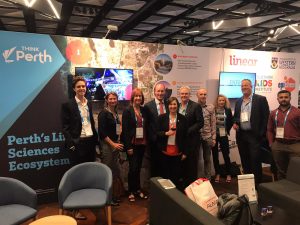
    The AusBiotech conference is the premier annual conference for Australia’s Life Sciences sector. The 2019 conference brought together Australian and international biotech leaders and stakeholders in Melbourne for three days of education, skills building and networking. WAHTN was one of the Think Perth delegation who attended the conference. We were accompanied by representatives from the City of Perth, The University of Western Australia, Epichem, Linear Clinical Research, Telethon Kids Institute, Proteomics International, Lazcath and the Perth Convention Bureau to showcase the burgeoning life science sector in Perth and WA to a national and international audience.

    Western Australia has shown the largest increase in life science companies. Since 2017 we’ve had a 50% increase in the number of organisations, increasing from 119 to 179 in 2019.

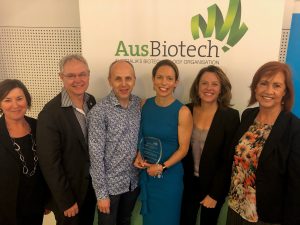
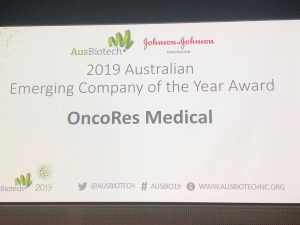
    A young West Australian company OncoRes Medical won the 2019 Australian Emerging Company of the Year Award. Dr Katharine Giles (Chief Executive Office and Managing Director) accepted the award on behalf of OncoRes Medical (see image below). This prize was awarded on significant achievements by a company working in the biotechnology or life sciences sectors, and is specific to companies under five years of age. We congratulate our friends at OncoRes Medical for a well-deserved award.


  • National Imaging Facility – Advancement in Western Australian node

    The Western Australian node of the National Imaging Facility (NIF) is expanding and acquiring a dedicated human research 3T MRI. The new MRI will be located at the QEII campus, available to all WA researchers and provided at the lowest sustainable cost. The expected commissioning date is Q1 2021.

    An information workshop is being held to inform WA researchers about the opportunities the MRI provides and how to access and take full advantage of the machine when it is installed.

    Graham Galloway, the CEO of the NIF will be presenting and there will also be discussion on how to incorporate the MRI activities in this round of grant applications (NHMRC and ARC).

    The workshop is a good opportunity to get all the relevant information about the new MRI and meet other researchers who will also be using the MRI.

    The workshop will be held on Tuesday, November 19 from 3 – 4 pm at the Harry Perkins Institute of Medical Research. If you would like to attend please RSVP.

    Supporters

    Thank you to all supporters of this expansion:

    • National Collaborative Research Infrastructure Strategy (NCRIS)
    • WA State Government
    • Lotterywest
    • The University of Western Australia
    • Cancer Council WA
    • Curtin University
    • Perron Institute for Neurological and Translational Science
    • Ian Potter Foundation
    • Edith Cowan University
    • Harry Perkins Institute of Medical Research
    • Murdoch University

    Graham Galloway

    Professor Galloway is the Chief Executive Officer of the National Imaging Facility (NIF). He has been instrumental in establishing imaging collaborative research infrastructure in Australia.

    He is passionate about providing open access to the imaging resources and enabling effective use of those resources. Graham’s research interests include the use of in vivo Magnetic Resonance to test the efficacy of pharmaceutical agents, novel applications for the use of Magnetic Resonance in physiological studies and material sciences, and pushing the boundaries of the technology into new applications.

    His role in all projects is characterised by his multidisciplinary background, which ensures that he is able to draw together apparently disparate threads.

    User Survey

    Over the past year, WAHTN has been working with the WA research community to procure a research-dedicated human MRI and human PET-CT. We are asking you to complete a short survey to estimate the potential usage of the two machines once they are commissioned.

    Please click on this link and answer a few quick questions. The survey takes less than a couple of minutes to complete.

  • WAHTN’s 2020 Biostatistician Fellowships

    The Western Australian Health Translation Network (WAHTN) is inviting applications for 2020 – 2021 Biostatistician Fellowships. The application period closes:  9am (AWST), Monday 25 November 2019.


    The Fellowships align with WAHTN’s aim to support emerging research talent, building and strengthening the research workforce within WA, and enhancing our capacity and capability to undertake high quality translational research. WAHTN is offering two (2) Fellowships to employees of WAHTN Partner Organisations to provide protected time to undertake a 12 month Fellowship. The first Fellowship round will be from January 2020 to December 2020 and the second will be from July 2020 to June 2021.


    The Fellowships are designed to provide training opportunities for Biostatisticians to develop their skills for consulting with clinical researchers, build relationships for future collaborations, and provide biostatistical support to WAHTN Partner Organisations.


    Applications must be submitted by the Applicant to the WAHTN’s Clinical Trial and Data Management Centre (CTDMC) via email at CTDMC@curtin.edu.au. Late applications will not be accepted. Please direct any enquiries to the CTDMC via email: CTDMC@curtin.edu.au or phone: 08 9266 1970.


    Download the Application Guidelines and Form here.

  • NHMRC Development Grants 2020 Round Call for Applications

    The National Health and Medical Research Council (NHMRC) have made a call for applications for the Development Grants 2020 round.

    The objectives of the Development Grant scheme are:

    • to increase, facilitate and expedite the translation of health and medical research outcomes through to commercialisation, within a foreseeable time frame.
    • to support proof-of-concept research with a feasible commercialisation pathway and a high likelihood of producing protected IP.
    • to provide a potential mechanism through which research outcomes can be progressed to a stage that makes them competitive to receive industry investment through other government schemes or from the private sector.
    • to encourage collaboration between health research, the private sector and industry (domestic and international).

    Applications close: 5pm (ACT Local Time) Wednesday, 11 December 2019. 

    For more information about this grant opportunity please visit Grant Connect.